Saturday, March 7, 2015

Best Oil Paint Glaze for a Smooth Surface

Oil Painting Glaze Ingredients
Damar Varnish: Linseed Stand Oil: Mineral Spirits
My favorite glaze for oil painting is Damar Varnish: Linseed Stand Oil: Mineral Spirits* in a  1:1:1 ratio. This is a very high quality clear glaze that creates a strong paint film.  This homemade glaze is mixed in a very small quantity:  I put equal parts in a 1 oz glass jar with a screw top lid and shake it up.  I usually make a small amount at a time, because it does thicken up a bit over time.  I do not dip into the jar, but pour it out into my paint mixing container.   Treated this way, it will last weeks in a tightly lidded jar.

This glaze mixture is said to dry relatively quickly. I find that it takes several days in my humid climate. Even though reworking the painting can occur early in initial painting session of a new glaze layer, the painting does not remain 'open' beyond this first day as this glaze becomes increasingly tacky during the drying period. That being said, there is a much longer open period compared to Liquin glaze.

This is perfect glaze for using on panels or other smooth rigid supports.  I also like to use it on canvas.  I use this formula of glaze when I want an extremely smooth surface without much in the way of texture or brushstrokes.
 
Many of my paintings are layer upon layer upon layer....of glazes and transparent or semi-transparent paints.  This glaze is perfect for this style of multi-layered painting.  The end result is a finish that has a slight sheen, but not a high gloss finish.
 
*The Brands I use: Richeson Damar Varnish, Maimeri Stand  Linseed Oil, Gamblin Gamsol 100% Odorless Mineral Spirits.


Saturday, February 14, 2015

Going to the Chapel

Going to the Chapel- A Painting

Going to the Chapel from the series about marriage.
In the final stage foggy mist was added.  See the pre-mist version here.


Going to the Chapel


10" x 30" x 1"
oil on canvas
© 2013 by julie susanne


Detail of Going to the Chapel.

Bride with bouquet.


Again, the albatross.


Skull and stone pathway.


Chapel and hooded figures.

Thursday, January 1, 2015

How To Paint

Learn To Paint 

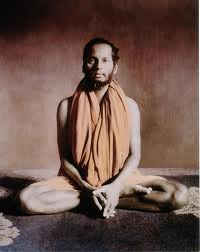
Baba
Swami Muktananda

The mecahanics of painting can be learned from classes, books and master artists.  This is information.  Incorporation of this information into your painting life leads to knowledge.  Your experience with the act of painting deepens this knowledge.  But how do you get to the place of wisdom and the place of creating really, really great art? 

Painting From Your Core

By "painting from your core"  I mean from the center of your being.  I mean being in the moment.  This is very different than doing.  It requires a spiritual approach in which the attention is inward turned.  The attention is turned inward away from the outer manifestations of the mind thoughts.  I believe this requires a specialized teacher.

Painting Using Your Inner Light

It is often said that when you are painting, you are "painting the light."  I want to suggest you take it further and use inner light to paint.  Again this requires a spiritual approach it is an internal process of painting from your Heart. 

This also requires a teacher as few of us were born knowing how to do this.  My teacher is Rohini Ralby.  Her new book Walking Home with Baba: The Heart of Spiritual Practice can help guide you to that wisdom.  She talks about why we need a teacher on her blog.  She addresses finding a teacher with an authentic spiritual lineage.

Painting can be cutting, pasting, repackaging and selling.  Alternatively, you can paint as a spiritual practice and truly unleash your creativity.

Sunday, October 12, 2014

Oil Painting Mediums part 1

Oil Painting Mediums part 1

Oil paint can be used directly out of the tube as is.  And this is a fine way to paint.  Paint with the paint; clean the brush. The end.  With this method of using no medium, paying attention to oil content of paint may be important to preventing cracking- use most oil laden paint (which is slower drying) on upper layers: "Fat over Lean."

Linseed Oil

Alternatively use straight linseed oil as your medium, using less oil in layers closest to canvas and use more oil in the top layers...again "Fat over Lean."  More Oil (more fat) = More Drying Time!

Turpentine

Turpentine a solvent can be used to thin paint- it dries quickly and is best used for first layers or blocking in a painting; a very lean layer of oil paint.

I previously used pure gum turpentine for thinning and cleaning brushes.  It had a sweet strong odor.  Now I can no longer find this, either in hardware store or art supply store.  Yes, "pure gum turpentine" can still be purchased, but it is different...way different.  It has a foul, dead animal smell that I find terribly offensive.  I don't use it anymore.

Mineral Spirits

Mineral Spirits is a solvent that can be used in place of turpentine.  As with turpentine, paint thinned with mineral spirits makes for a leaner layer than paint right out of the tube.  I have used Gamsol 100% Pure Odorless Mineral Spirits as well as Kleen Strip Odorless Mineral Spirits from my local hardware store.  I do not notice a difference between these two.  Use mineral spirits for thinning oil colors, modifying other painting mediums, and studio clean up.  Less Oil (less fat or lean) = less drying time.

Simplest Oil Paint Medium Technique

  1. With paint thinned with mineral spirits (or turpentine) paint first layer onto gessoed canvas and let dry if desired.
  2. With paint straight from tube or lightly thinned with oil (such as linseed oil) paint next layers and let dry if desired.
  3. With paint thinned only with oil paint final layers .
The above method generally not only maintains a "Fat over Lean" concept but also allows a layered painting technique improving depth and luminosity. 


Sunday, July 6, 2014

How To Know If You Are A Professional Painter

wave #2
2-3/4" x 6 " x 1/4"
oil on palm sheath and masonite
© 2014 by julie susanne
"Am I a professional painter?" Have you ever asked yourself that question?  How do you know you are a professional painter?  Are you a professional painter because you have a degree in fine arts, because you were in this show or that show?   Or are you a painter because of your commitment and drive?  Do you paint when it is inconvenient? It's too damn hot, you're still painting. It's too cold, you're still painting. Your body hurts from holding the same position, you're still painting. The bugs are tormenting you, you're still painting.  When painting in public, people are critiquing, commenting, quipping, and basically tormenting you as well, you're still painting.  You're tired and hungry, you're still painting.  When you think about painting you are thinking about how to enhance your development, how to push it further how to get better.  Your focus is on making better art.  You rarely think in terms of what is selling right now in order to paint that.  When you do think about painting what is popular, you can't bear the thought of it.  Instead, you paint what you are driven to paint.  You paint because you have to.  When you are not painting, you are unhappy, maybe even depressed.  You wonder how little you could live on to survive and paint full-time.  You sell your stuff to buy more paint or a brush.  You know that if you price your work for what the market will bear that you are making about half of minimum wage, and you paint anyway.  So how do I know I am a professional painter...I just know.

Sunday, March 30, 2014

Art Opening at Expressions

Beach Shack
6" x 12" x 1/4"
oil on masonite
© 2014 by julie susanne
Expressions of Local Art in Melbourne Beach, Florida is the place to be this Wednesday evening for Meet the Artisit Nite. This new venue is having it's second art opening Wednesday, April 2, 2014 from 7pm to 9pm. Stop in and see my latest work from the series: Old Florida.


Saturday, February 22, 2014

Protecting Oil Paintings; Temperature and Humidity

Painted properly, an oil painting's driest layer or leanest layer is underneath the surface layers. These surface layers contain the fattest paint or the paint containing the most oil. A painting can thus dry from the inside-out without cracking. A painting can take a month or more to "dry." Though it may be 6 months or more before a painting has cured or sufficiently hardened. I began discussing caring for an oil painting in a previous post. Environmental factors can aid or inhibit the curing process. Temperature and humidity can negatively impact a painting. The ideal environment is dust-free, smoke free at a temperature of 70° F and a relative humidity of 45-55%. These archivally perfect conditions can be replicated for work that you intend to last centuries. If perfect museum conditions are not possible or practical, a modified plan can be put into place. For example, during the most humid time of the year, keep paintings in a climate controlled environment. Temperature fluctuates less in inner rooms, and on inner walls. Outer walls and rooms closer to the exterior have greater temperature and humidity changes. Prevent mold and moisture and heat exposure by not hanging artwork in bathrooms, kitchens or other moist areas. Limit other environmental insult by not keeping art near fireplaces, wood stoves or in rooms where cooking occurs. Artwork placed on walls near radiators and wall vents can also suffer. Ideally art should not be stored in attics, basements or garages. Even taking a few simple precautions can extend the life of your original artwork.

Link Within

Related Posts with Thumbnails